Techo Kaigi 2024: My Planner Review - Part Two
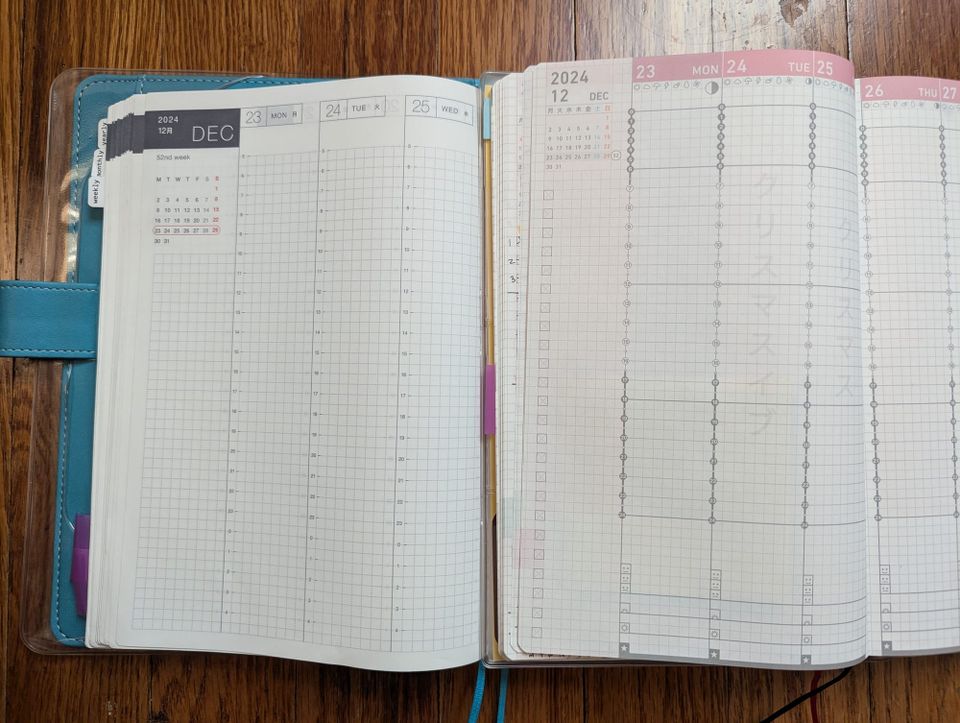
Here is Part Two of my Techo Kaigi, or planner review. In Part One, I discussed why I am interested in planners and what I used in 2024 - what worked, what didn't, and what I wanted to change for 2025. See that post here! In this post, I describe what I chose for 2025 and why.
2025 Planners
I made a change for 2025! There have been a lot of reports in PlannerLand that the paper for the 2025 Hobonichi has been a mess, so I was wary about buying a 2025 edition. I don't use fountain pens (yet?), but the problems didn't seem exclusive to that ink style. Also, as I mentioned in the last entry, I was hesitant to buy another planner that required me to design each Weekly layout, a feature of the Hobonichi.
Schedule & To-Do List
So, for 2025, I broadened my search a bit and came across the Jibun Techo A5 Slim Weekly planner (aka Diary). This planner is almost exactly what I was looking for! There isn't much information on this planner online, so I wasn't 100% sure if I'd like it, but I took the gamble and bought one - and I love it! I've been using it since mid-November (it has a November start) and have really enjoyed the new setup.
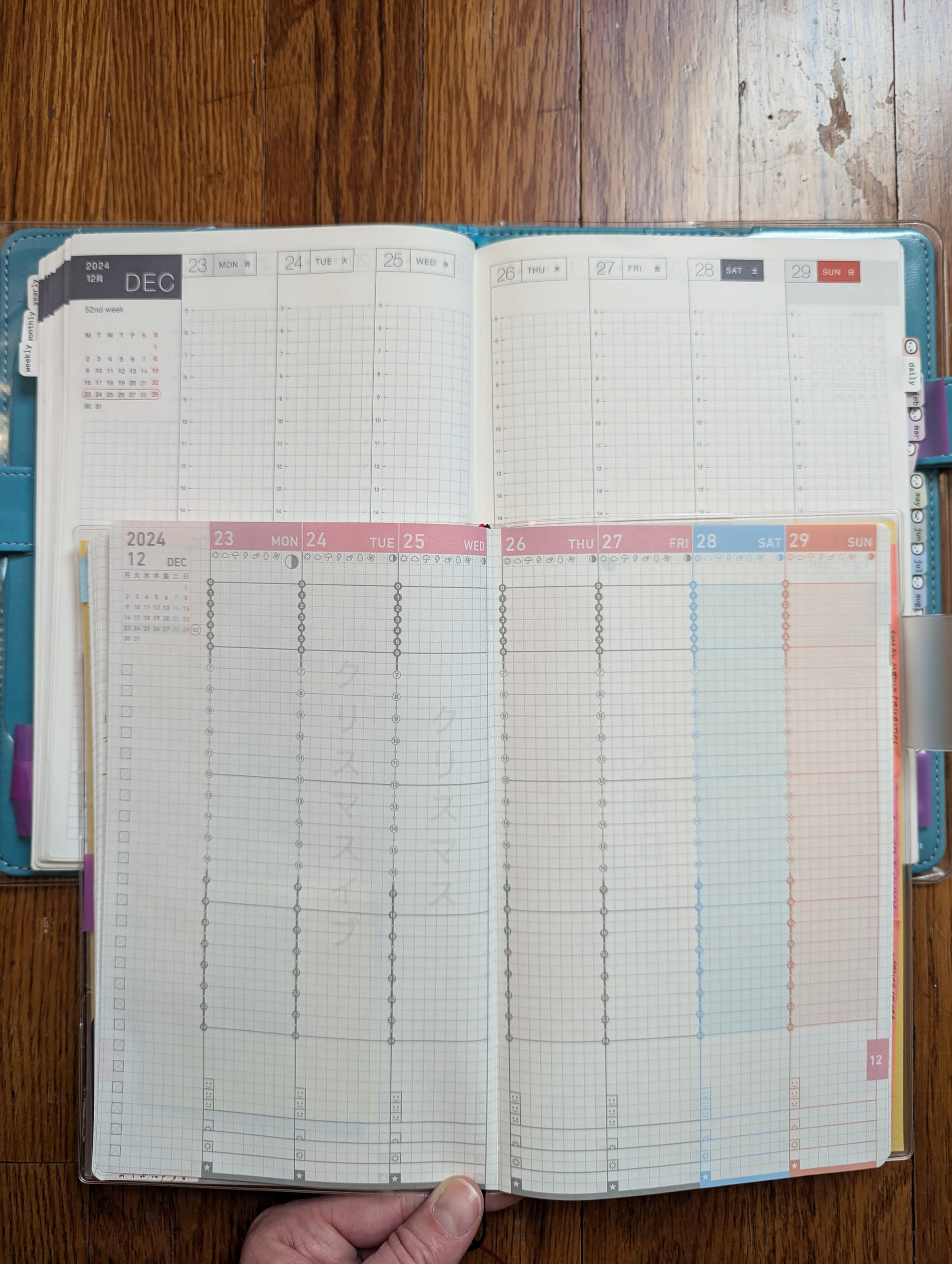
Layout: Each weekly view has a spread of columns for the week with a Monday start, which is my preference. The furthest left column is a to-do list area. Each day has a column with several boxes. From top to bottom, the boxes are:
- A box to record the weather with the moon phase pre-printed;
- An area corresponding to midnight to 6 am that you can use for the day's theme (I use it for sleep tracking right now);
- An area for your schedule for your day (6 am-midnight) with subtle dot colors to indicate daylight (empty dots) and nighttime (filled dots) in Tokyo, which is about 30 minutes different from where I live;
- A box to reflect on the day on the bottom with a simple mood tracker;
- A small area to track meals is split into morning, midday, and evening, but this area could easily be repurposed.
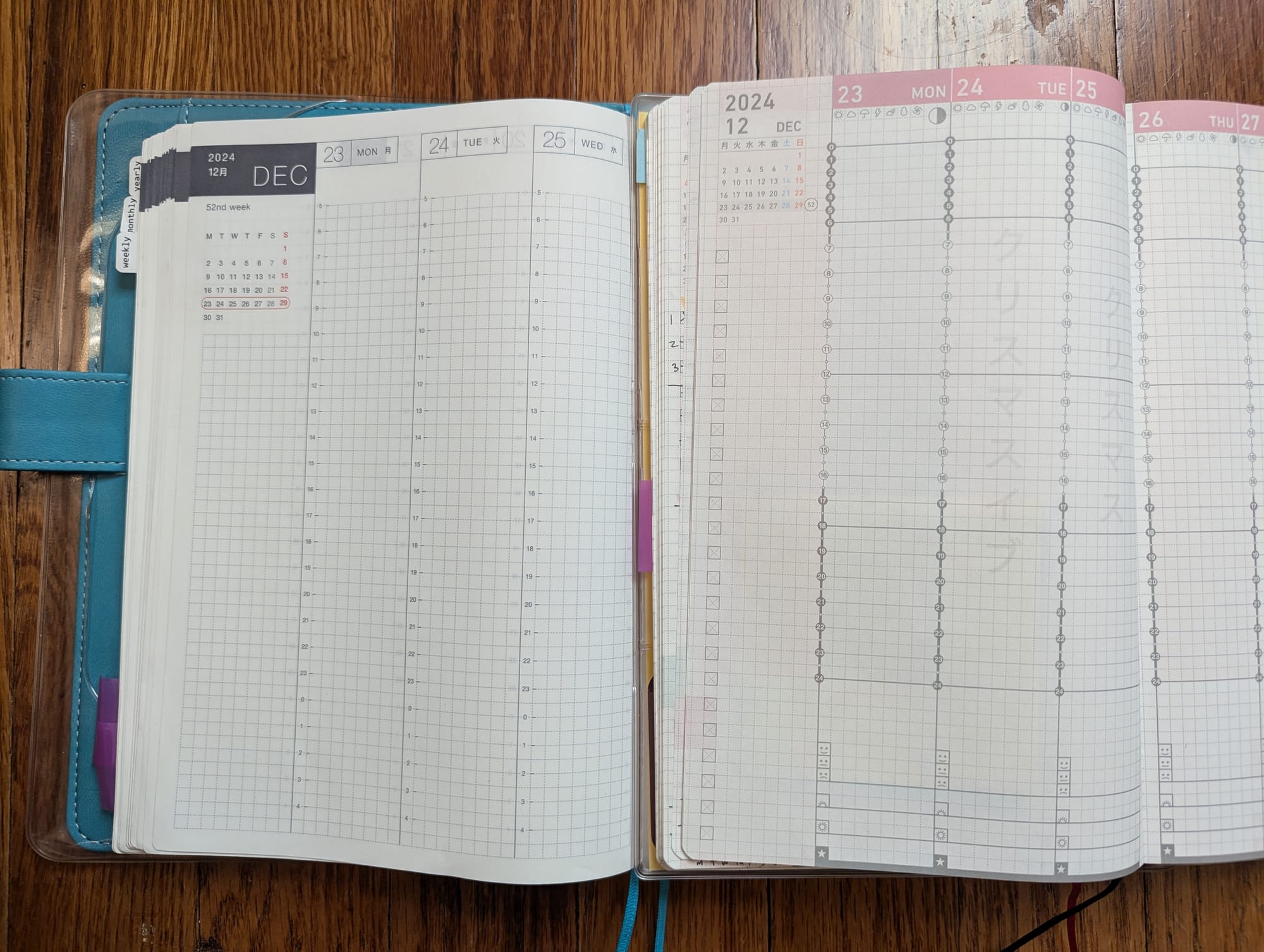
The Weekly planner only has weekly spreads and monthly views, no day pages. There are additional sections, like an area you could use for Gantt charts or habit tracking, and many pages with list tracking (like books to read, presents received, etc.). Tracking things like that is a bit of a Thing with Jibun, so if you like that, this planner line would be a good fit for you. (They even sell a separate book just for tracking, called the Life book.)